


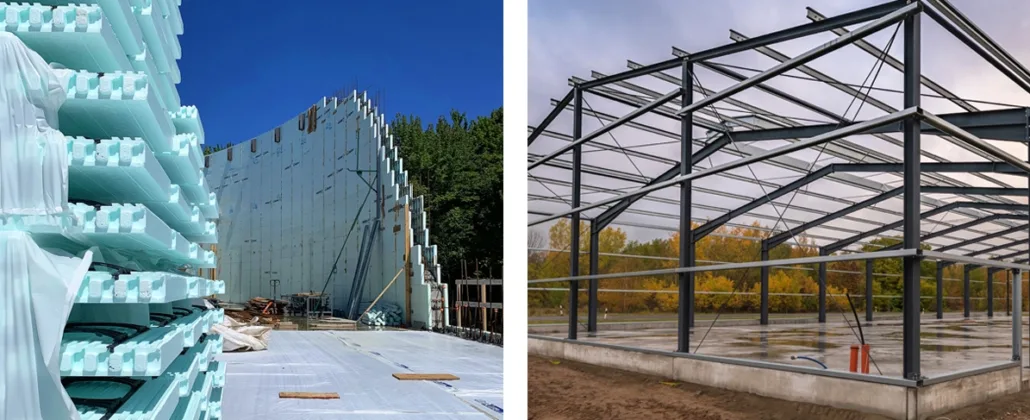
If you’re planning a large-scale commercial build, choosing the right building materials is the foundation for your success. Considerations such as energy efficiency, budget and long-term performance are essential when comparing your options. Insulated Concrete Forms (ICFs) and steel construction stand out as top contenders, but which is the best solution for your project’s needs?
This guide offers a detailed comparison of ICFs and steel-framing, examining critical factors such as durability, energy efficiency and cost-effectiveness.
Energy Performance
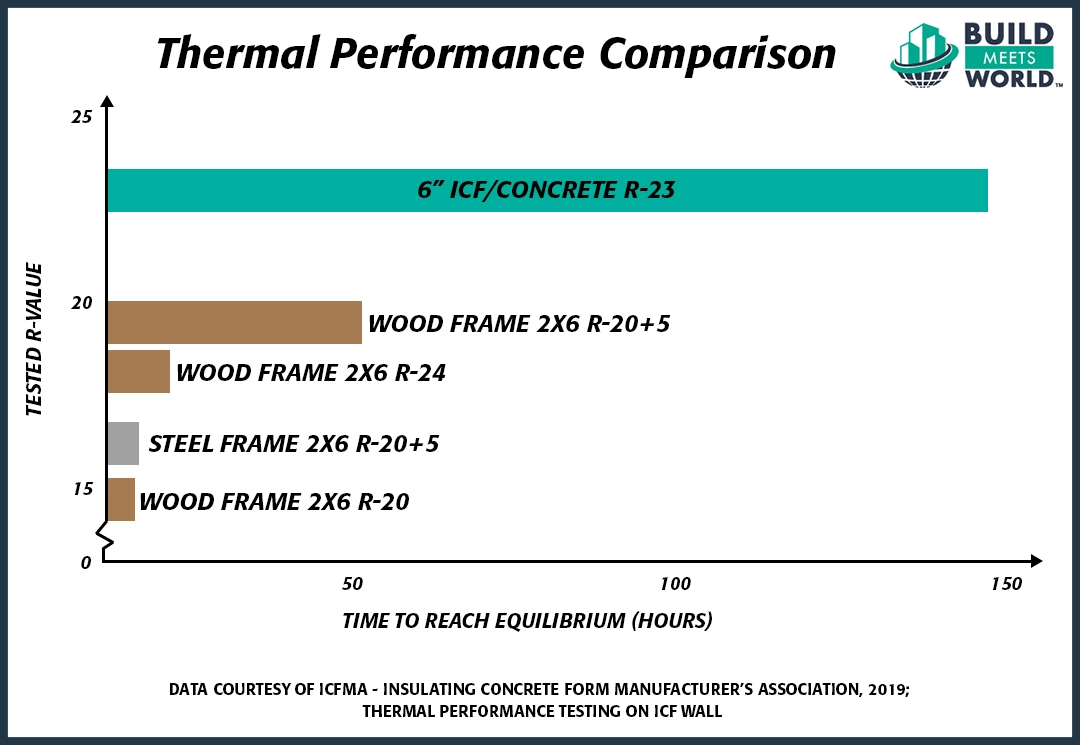
When it comes to thermal performance, ICFs far surpass steel construction. ICF walls feature continuous insulation (CI) on both the interior and exterior, eliminating thermal bridging, minimizing air leakage and improving energy efficiency. For example, a standard 6-inch Nudura ICF wall achieves an R-value of R24. Meanwhile, steel’s high thermal conductivity leads to significant heat transfer issues, reducing conventional insulation effectiveness by up to 63% ..
The energy inefficiency with steel significantly impacts HVAC performance, resulting in higher operational expenditures over the life of the building and potential occupant discomfort due to inconsistent indoor temperatures. With ICFs, you not only have optimal energy performance but also lower HVAC demand, which can reduce monthly utility bills by up to 60%.

Learn more by clicking here.