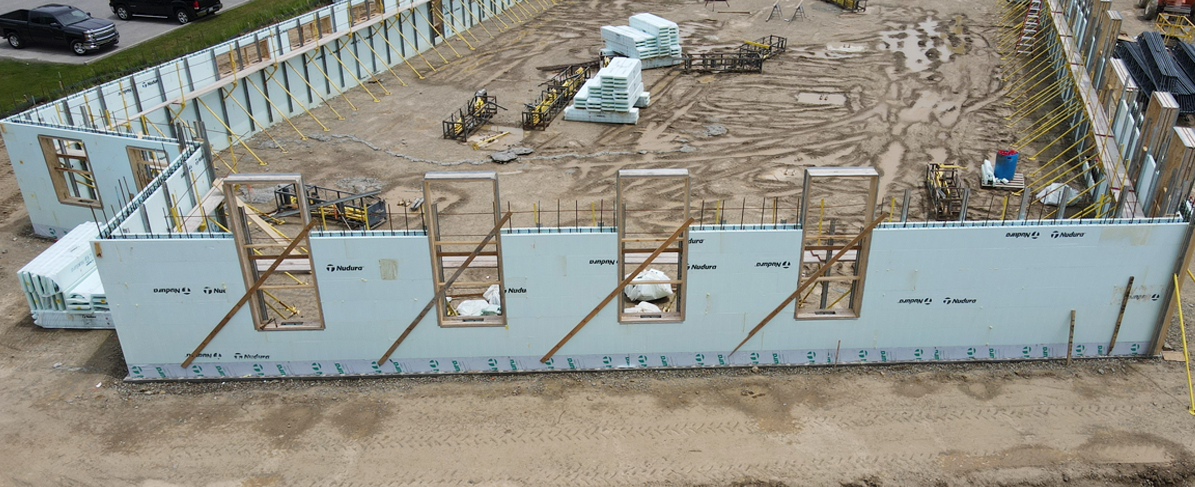
As you’re planning your Insulated Concrete Form (ICF) build, selecting the right window buck system affects everything from budget to installation complexity to your structure’s thermal performance. Window bucks create finished punched openings and serve as the foundation for transitioning the glazing system to the wall assembly, so they’re critical to get right. With numerous bucking technologies on the market for ICF walls, it’s important to know how each can impact your concrete building during and after construction.
This blog post will help you understand the differences between PVC, EPS, steel and wood buck options so you can make the material selection that best matches your ICF project requirements.
 Traditional Wood Bucking
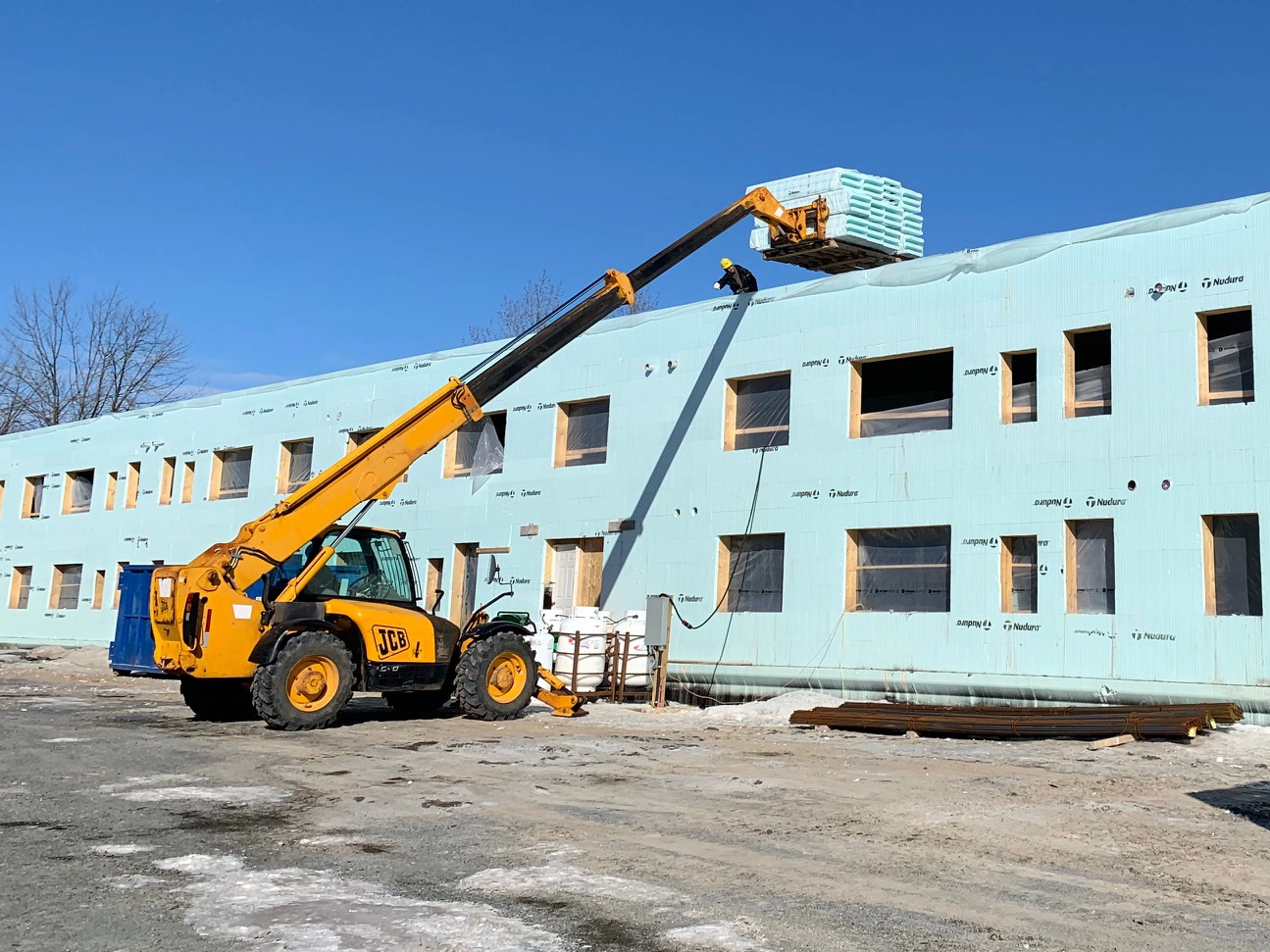
Standard wood window bucks are a common and affordable route, but can require a lot of field measuring and cutting to get the right fit for your wall openings. With the pressure exerted during an ICF concrete pour, there are some concerns about the strength of these bucking systems. This concern extends post-construction, as the stay-in-place wood can be susceptible to warping, twisting, decay and termite damage.
In addition, untreated lumber cannot be in direct contact with concrete. For the attachment of the lumber to the concrete, usually fasteners are installed on the backside (concrete side) of the buck which grab into the concrete. However, this critical connection is only at these fastener points and is not continuous around the entire buck.
This can be problematic with the common challenge that most lumber is not entirely straight, which could result in air leakage around the openings. It is also increasingly difficult to get lumber wide enough in one piece to accommodate wider width walls, forcing installers to use multiple pieces leading to more field work and thermal breaks.
PVC and EPS Foam Buck Options
PVC and Expanded Polystyrene (EPS) buck systems offer a more affordable starting point for window framing in ICF construction. They are best suited for residential applications and have the lowest material cost.
However, there are some drawbacks to selecting the budget-friendly option. Both PVC and EPS buck systems require wood shoring and bracing during concrete pouring and placement to prevent bowing or deflection. The additional labor can offset some of the upfront savings. These systems also have shear and pullout resistance limitations, which restrict the attached glazing system and finish material options . There are also limited fastening options with this route, so while the bucks might have fastening strips in them, they may not be in the exact spot needed for the attachments.
Continue reading here.