
nrodgers

About Natalie Rodgers

This author has not yet filled in any details.
So far Natalie Rodgers has created 72 blog entries.

Job Alert – Executive Director

The ICFMA is seeking a qualified candidate for the Executive Director position. Applicants may apply by submitting their résumé to [email protected]. Role Overview The Executive Director is the senior operational and strategic leader of the ICFMA, responsible for advancing the Association’s mission to promote and enhance the social, environmental, and economic value of insulating concrete forms in the North American marketplace. This role serves as the public face of the Association, the primary driver of its strategic priorities, and the central coordinator of advocacy, technical excellence, education, marketing, and member engagement. The Executive Director works under the oversight of the Board while operating with a high degree of autonomy in execution. This role is envisioned as a 4 day (approx. 32 hrs) per week assignment. Click job title below to view and download full job description. Executive Director

By |2026-04-21T12:56:32-05:00April 21, 2026|Featured, Miscellaneous, Press Releases|

A Global Approach to Earthquake Resistant Construction

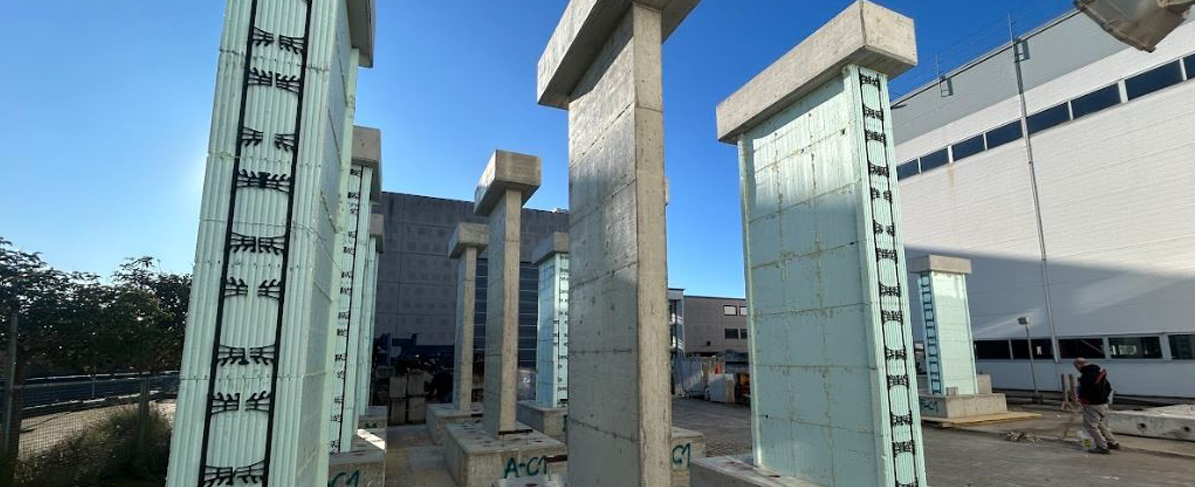
In North America and Europe, safety concerns have been growing around severe seismic activity, especially after 3 major earthquakes in 2020 across Croatia, Turkey and Greece caused more than 1 billion Euros in damage. So how can we design buildings to be safer during earthquakes? Tremco Construction Products Group and their Nudura® Insulated Concrete Forms (ICFs) and framing brand have partnered with the Eucentre Foundation, a global leader in earthquake research and engineering located in Italy, to explore the building design options for earthquake-resistant construction. Starting with cyclic testing of Nudura ICF walls, this data will serve as a prototype for developing a Seismic Cyclical Shear Test Standard for reinforced concrete structures that will eventually be included in European design standards, Eurocode 8: Design of structures for earthquake resistance. The goal is to standardize building material performance testing to reduce the potential of infrastructure damage and loss of lives associated with seismic activity. Continue reading full article here.

By |2026-04-06T08:19:04-05:00April 9, 2026|Featured, Technical|

Construction to Withstand Natural Disasters

Building for Resilience: Adapting Construction to Withstand Natural Disasters Despite the increased frequency and intensity of natural disasters in the United States and Canada, extreme weather like hurricanes, tornadoes, flooding and wildfires do not have to mean devastation for our communities. This article highlights the urgent need and practical implementation of proactive hazard mitigation, reinforced building codes and resilient construction practices to save lives, protect infrastructure and speed economic recovery in the wake of climate disaster events. Continue reading and learning more here.

By |2026-01-16T14:00:10-06:00March 2, 2026|Featured|

School Safety Starts with Design: The Role of ICF Storm Shelters in Schools

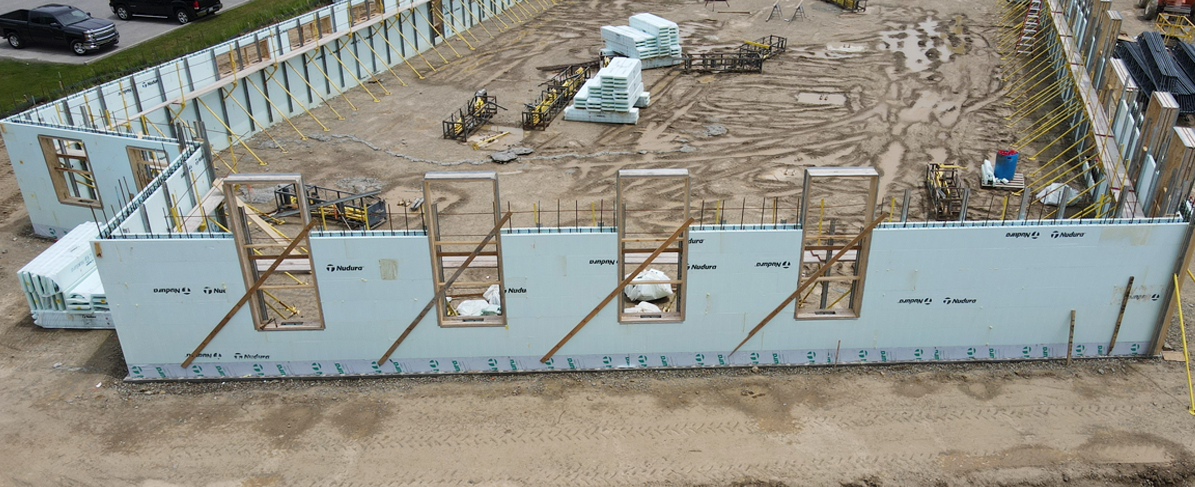
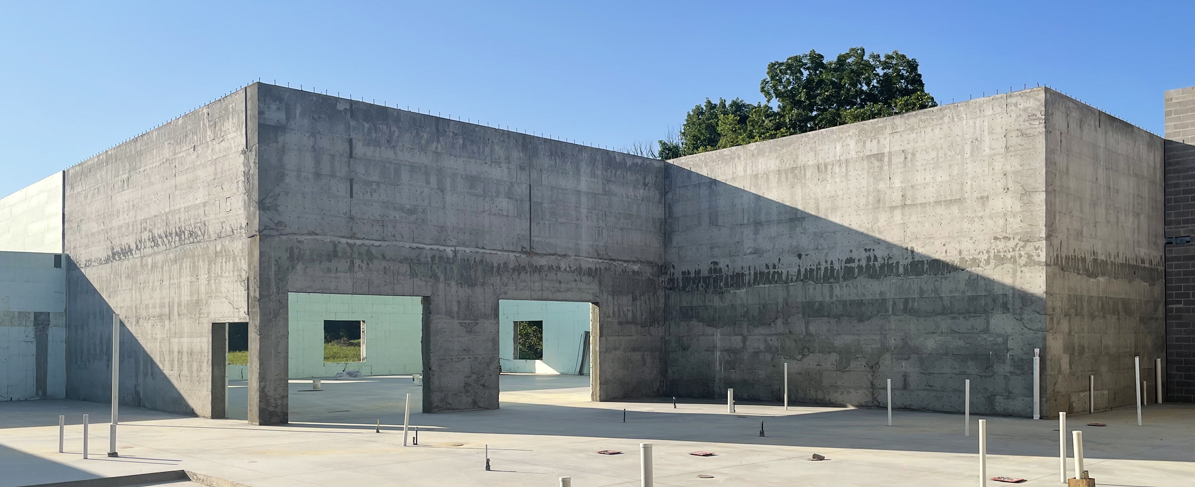
When it comes to the safety of students and faculty, schools can no longer afford to overlook storm shelters as an essential component in their buildings. With the increase in natural disasters like tornadoes and hurricanes, educational facilities must protect their communities while also meeting evolving building codes and tight budgets. The question becomes how can schools include storm shelters in a cost-effective manner without compromising safety or functionality? In this blog we’ll explore why storm shelters are essential, the challenges schools may face in building them and practical solutions school districts can use during construction to deliver student safety. Why do we need storm shelters in schools? Extreme weather is on the rise with a growing number of tornadoes and hurricanes impacting regions across North America. Considering the risks, the International Building Code (IBC) now mandates schools in ICC 500 high-speed wind zones and with occupancy levels over 50 people to include storm shelters built to ICC 500 standards. Even for school districts outside of these areas, constructing a safe room or storm shelter future proofs your building and provides protection for students and staff. These added security measures can even enable your school to serve as a community storm [...]

By |2026-01-16T13:57:20-06:00February 23, 2026|Featured|

Dave Marrs’ Advice for Homebuilders New to ICFs

Dave Marrs, co-host of HGTV’s Fixer to Fabulous, is not just a television personality but also an accomplished homebuilder with over 20 years in the residential construction industry. In a recent Roofers Coffee Shop podcast, Dave spoke about his experiences building houses in Arkansas using Insulated Concrete Forms (ICFs) and his newfound passion for the technology. Take a listen for yourself or read on to uncover Dave’s advice to contractors who are new to building with ICFs like he once was. How ICFs Revolutionize Homebuilding Insulated Concrete Forms are two panels of expanded polystyrene (EPS) foam connected together with a web system, reinforced with rebar, and then filled with concrete to create a structurally solid and highly insulated wall. Compared to traditional wood-frame construction, ICFs provide continuous insulation that maximizes thermal efficiency and reduces heating and cooling costs for the owner. For Dave, the appeal of ICFs lies in their ability to deliver “sustainability without sacrifice”. In addition to being eco-friendly, building with ICFs improves a structure’s fireproofing, sound dampening and resistance to high winds and debris impact. This disaster protection was critical for Dave’s projects in Arkansas, where they’re seeing an increase in tornado activity. Therefore, he says that contractors should view ICFs as a unique opportunity [...]

By |2026-01-16T13:55:23-06:00February 16, 2026|Featured|
Go to Top